


True or false? When it comes to adult braces, dentists might say, it is true your palate is set and your teeth can only move so much. But is it false? Did you know your fascia plays a huge role in that flexibility of movement? During my own Invisalign treatment, I used the Face Stick and targeted tongue exercise to release the fascia around my teeth and gums. And did it work? Well, I’d have to say yes. It made for a much smoother and much more significant tooth movement than expected and really quite minimal in terms of discomfort during the realignment process.
A friend of mine went to the same dentist and she was told, “Oh, there’s a woman who comes in here and she uses a tool around her mouth and has seen massive improvements.” My friend mentioned it to me and I had a little giggle because that woman was me. I use a Face Stick to work through my cheeks on the nerves at the base of the teeth.
I’m Savannah Alalia, and welcome to the latest episode of High Functioning Human Podcasts where you connect yourself as a high functioning human.
So, yes, today we are talking braces. First question being, why might you consider braces in the first place? Well, there’s the obvious aesthetic benefits, like nice, lovely smiles, straight teeth and a wider palate which creates a fuller smile, which enhances your facial structure.
However, I’m really interested in what’s going on inside your body whilst the aesthetic shift is happening on the outside. For me, getting braces was about far more than just a straighter smile. It was because after I broke my sacrum, I had noticed that my teeth had begun to shift out of line. This happened alongside my hips popping out and shifting constantly, which then led to multiple migraines in a week. That parallel of everything happening at the same time meant I knew that this was a whole body issue instead of just a dental one.
Braces were just part of a much bigger picture for me because I knew that rushing into braces before my body was stable enough could actually make things worse. They were actually one of the last steps I took to get things open again. Does it surprise you to think that working on your fascia in and around your mouth could affect the placement of your teeth and the expansion of your palate? I know, right? In my Your Face Symmetry 2 program, I introduce working with the fascia around the roots of your teeth. And you spend quite a bit of time releasing tension in the mouth itself. So if you’re in that program, you’ll know how powerful that can be.
But, if this is new to you, you may have only ever thought about your teeth as simply existing inside your mouth. This might be the first time that you’re considering that what happens in your mouth has a link to the impact through the rest of your body.
So let’s start with the basics. You may assume that your skull is one solid structure. However, the adult skull is actually made up of 22 bones, and those bones move. One of the most important, in my opinion, is the sphenoid bone, which sits right in the middle of your face.
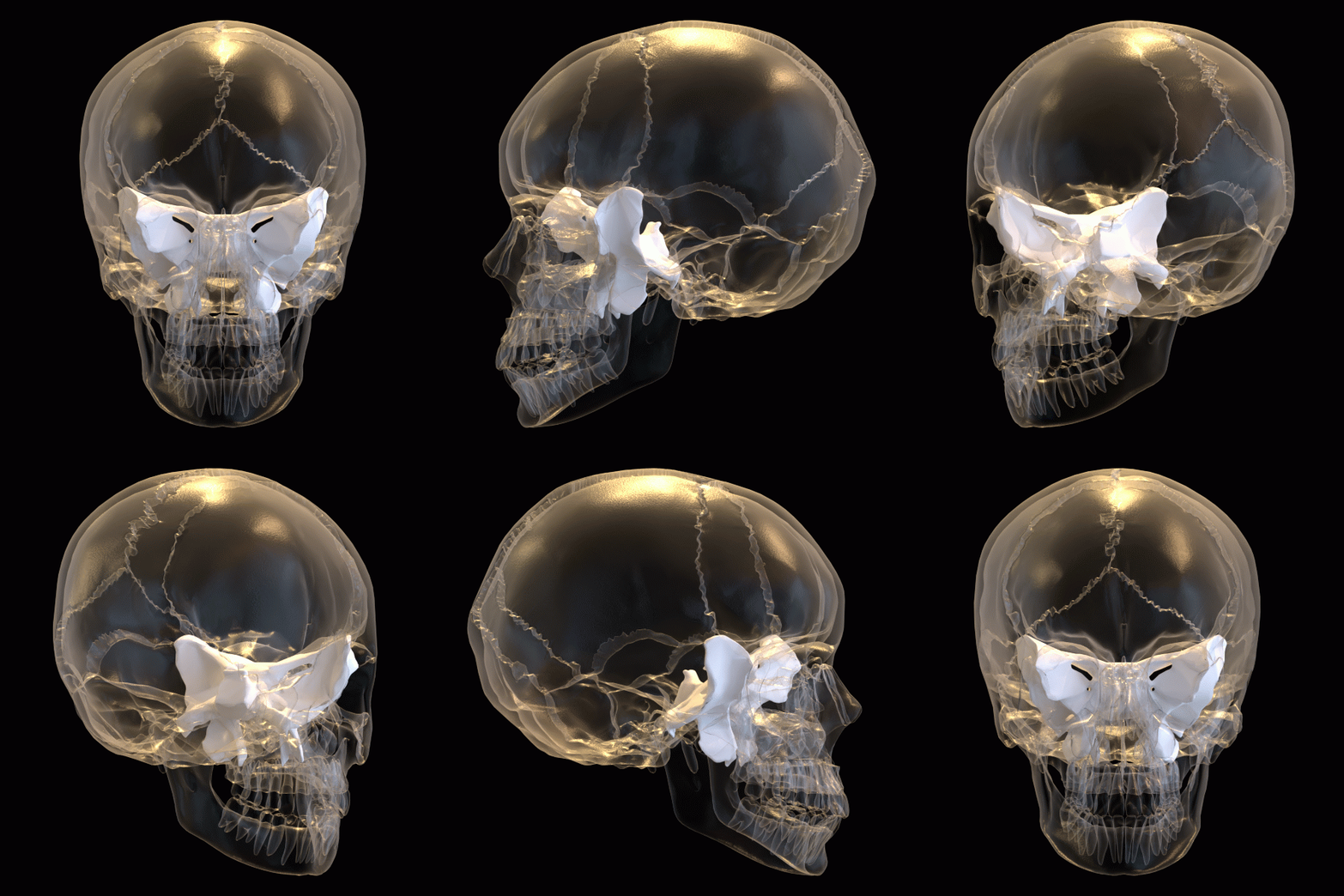
When your palate is narrow or twisted, it creates an imbalance in your sphenoid, which then affects your jaw alignment, your neck position, your breathing mechanisms, and so much more. Take a moment to use your tongue to feel the inside of your mouth, feel your teeth, the inside of your lips and the gums, the hard and the soft palate on the roof of your mouth. Your sphenoid sits just above that soft palate.
Your palate is more than just the roof of your mouth. It’s part of a fascial network that extends down through the midline of your body and your diaphragm, your pelvic floor and even the outsides of your hips. Opening your palate also gives space for your sphenoid to sit properly, affecting how your skull sits on the rest of your body. So you can see how this is a huge conversation that goes way beyond your teeth and into the alignment of your entire body. The position and function of your tongue also plays a part in getting things open. But this is a huge topic and we’re going to go into that in the next episode.
However, certain therapists like craniosacral therapists or Rolfers and others can be very anti braces in adults because of the pinning that can occur particularly through static braces. And to be honest, I agree with that to a certain extent, because you ideally need removable braces. Your teeth need to have space they can move into and something that they can let go of. Especially as sometimes the release of the fascia is more of an unwinding process. You also need to be able to communicate this in body process with your orthodontist and be attentive, feeling what’s right, what’s wrong in your body as your teeth move.
If you do start working with your teeth either at home, fascia release or alongside braces, I really want to encourage you to avoid painkillers where possible. I know there can be some pain when you switch sets, but the fascia release part really does reduce that pain. And it’s important to keep the nerves awake and turned on to really get that straightening to move all the way down and through your body. A more effective approach is to gently stroke the nerve to keep them online while you’re helping them regulate. You can use the Face Stick at the beginning of this process.
My advice would be to aim to get a bodywork session, a massage for example, on the day that you switch sets. Treat it as part of your orthodontic process. It will make a big difference in the way that your teeth and your body respond. As I mentioned before, the internal structure of your mouth is a big focus in Your Face Symmetry 2, and this continues into level 3. If you’re considering dental treatment, I’d really love for you to try the program first to support that process and to become more in tune with your nerves and your teeth so that you can engage fully with the feedback from your body. As you start your braces journey, Your Face Symmetry 1 introduces facial fascia release, helping you understand where you hold tension, which leads to a more in depth exercise in the later programs, Your Face Symmetry 2 and 3.
And if you’ve started braces recently, then this is also going to be a great way to get the alignment that you’ve created to spread out through the rest of your body. If you want to support your teeth and your body as a whole, you’ll find all the details below.
I would love to hear from you. What is the one thing that you’ve noticed about how your mouth connects to the rest of your body?
Remember, trust your body and stay curious about the sensations in it because the world needs your voice and the magic it brings to us all.
Jump on my mailing list to stay reminded and connected with your intuition. Plus some special things that I really only share in email.
I look forward to chatting with you next time on High Functioning Human Podcasts. Take care and talk soon.
As always, I remain a cheerleader for your inner self-worth,